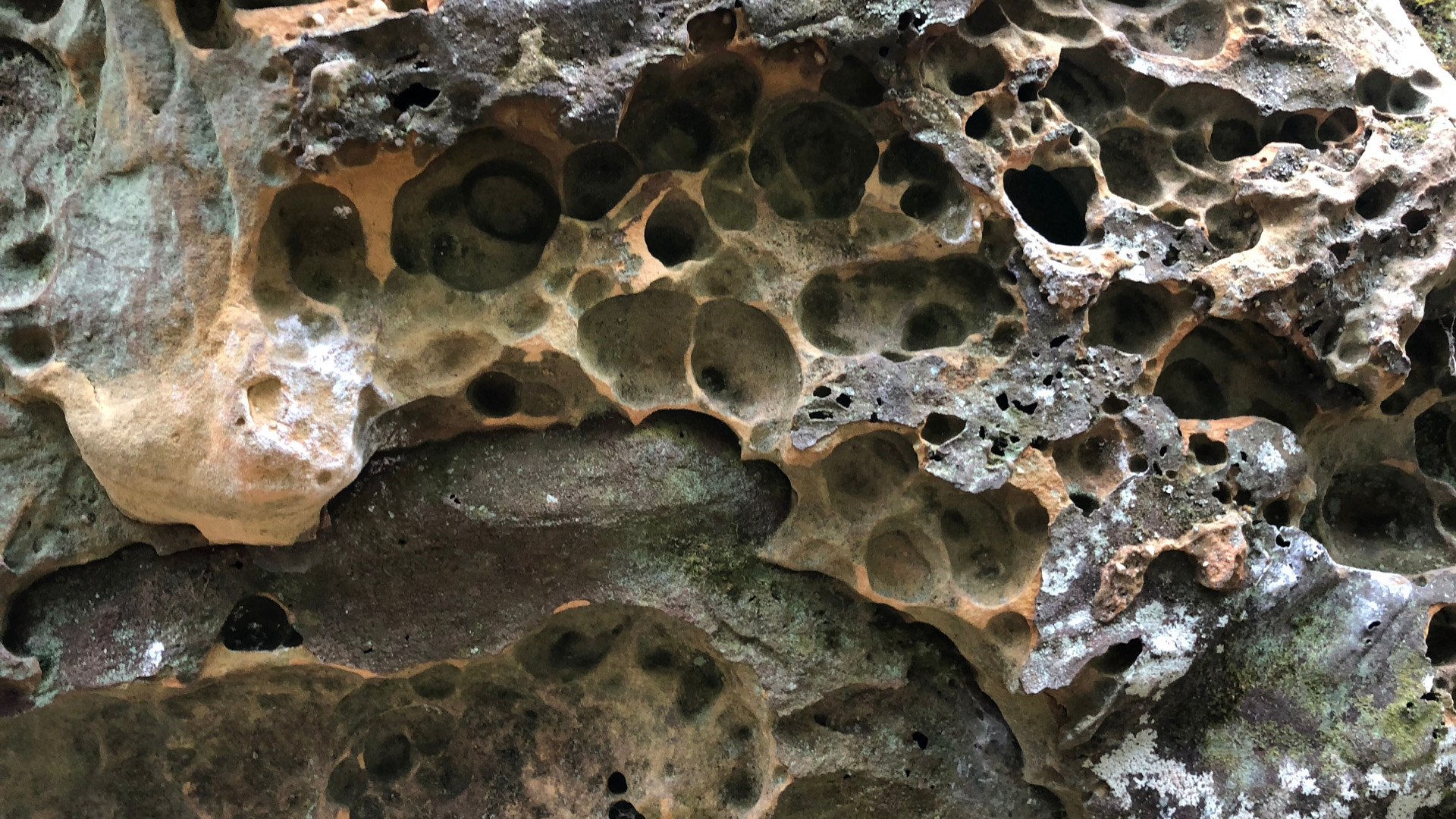
The breathtaking cliffs, arches, and outcrops that define the Red River Gorge aren’t just the result of ancient geology; they’re still being shaped today and especially through the winter. Kentucky’s freeze-thaw cycles during the winter play a major role in sculpting the sandstone formations that make the Gorge unique.
The Gorge is primarily made of Corbin Sandstone, a type of resilient but porous stone. While temperatures dip below freezing, water seeps into cracks and tiny pores in the rock. As it freezes, it expands, slowly widening the spaces. This process is called frost wedging, and it happens thousands of times over the winter and is one of the most important forces forming the Gorge’s arches, cliffs, and rocks.
Over long periods, this repeated expansion causes small pieces of sandstone to break away, creating the layers and ledges that are iconic to the region. Winter weather contributes to the development of rock overhangs, as soft layers erode more quickly than the harder sandstone above them.
Freeze-thaw cycles also influence the Gorge’s trail conditions and climbing routes. Hikers may notice the increased number of small rock fragments along paths or see large slabs that have recently broken off after a particularly cold night, followed by a warm afternoon. For this reason, climbers should avoid scaling wet or thawing sandstone in winter, as the moisture makes the rock fragile and susceptible to damage.
The beautiful scenery that visitors enjoy today is living proof of how nature is changing continuously. Winter in the Red River Gorge may seem quiet and still, but behind the scenes, the landscape is constantly evolving.